

Neighbourhood Safer Places
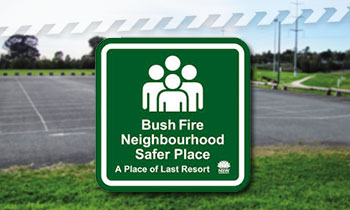 Neighbourhood Safer Places are a place of last resort during a bush fire emergency.
They are to be used when all other options in your bush fire survival plan can't be put into action safely.
You should be aware of any Neighbourhood Safer Places in your area, and note them in your bush fire survival plan before a bush fire occurs. You should also know how to get there, as well as alternate routes in case the road is blocked or too dangerous to drive on.
Not all areas will have a Neighbourhood Safer Place. If there is no Neighbourhood Safer Place in your area, you should identify other safer locations you can go to as a last resort. This might include a nearby home which is well prepared, a shopping centre or oval which is well away from the bush.
A Neighbourhood Safer Place is designed as a Place of Last Resort in bush fire emergencies only. Please note that travelling to or sheltering at a Neighbourhood Safer Place does not guarantee your safety.
Remember:
- Your safest option will always be to leave early.
- People with special needs, such as the elderly and people with a disability, should always leave before the threat of bush fire.
- If it is unsafe to leave the area or stay and defend your property, and the path is clear, you should move to your pre-identified Neighbourhood Safer Place, or other safer location, prior to the impact of a bush fire.
- Be aware that when you are travelling to your Neighbourhood Safer Place there may be heavy smoke and poor visibility.
- It is important that you are familiar with the area. Gather at the Neighbourhood Safer Place location and remain there until the bush fire threat has passed.
- The conditions at the Neighbourhood Safer Place may be uncomfortable and you may be affected by heat, smoke and embers.
- Water, toilets and food may not be available at the Neighbourhood Safer Place and emergency service personnel may not be present.
- Neighbourhood Safer Places are not intended for pets and livestock.
For more information, check out the NSP factsheet.

